
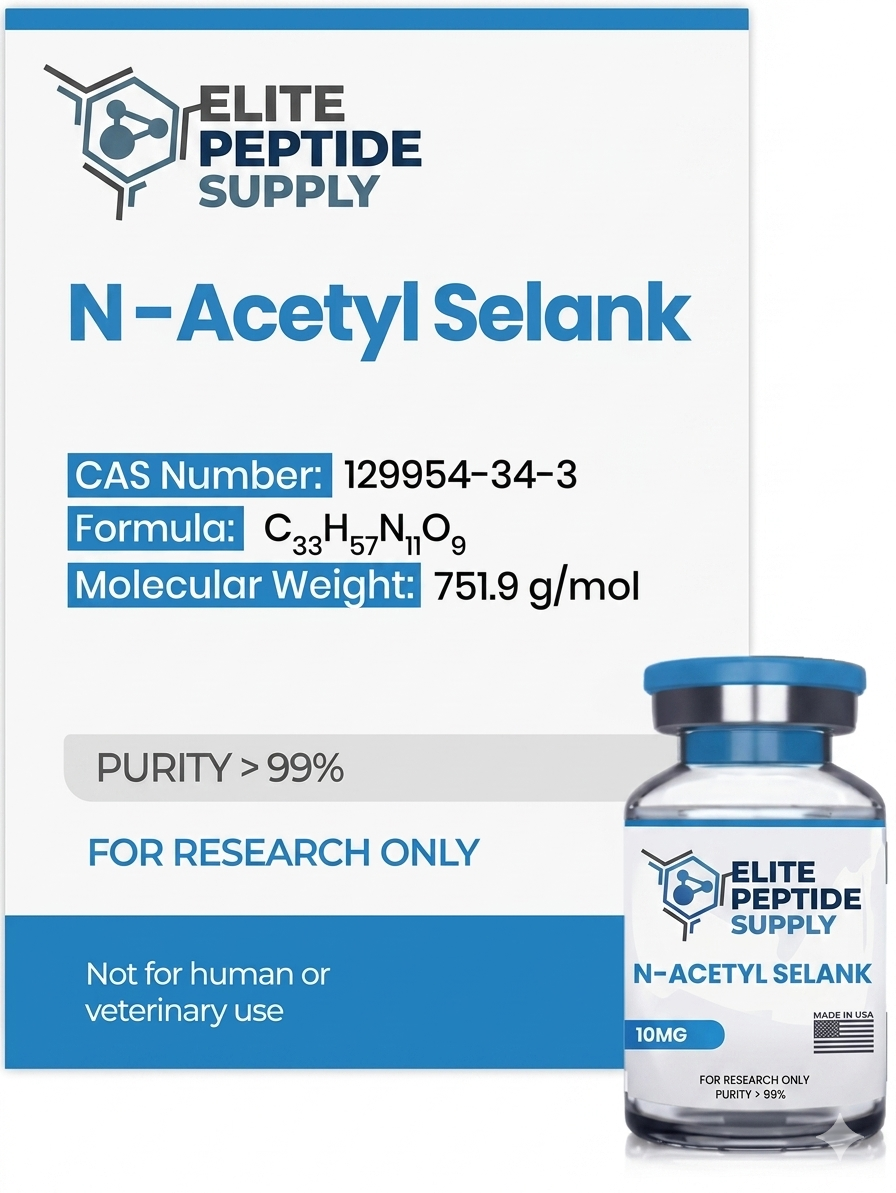
N-Acetyl Selank Peptide – Advanced Stability for Neuroplasticity Research
N-Acetyl Selank is an advanced synthetic derivative of the human tetrapeptide Tuftsin. By adding an N-terminal acetyl group, researchers have produced a molecule that is significantly more resistant to enzymatic breakdown than standard Selank. This structural modification is key to investigating the peptide’s prolonged influence on the central nervous system (CNS).
Key Research Areas:
- Neuroplasticity & Brain Signaling: N-Acetyl Selank is a primary subject in studies exploring neuroplasticity. Research focuses on its potential to influence the expression of Brain-Derived Neurotrophic Factor (BDNF), supporting the growth and survival of neurons in experimental models.
- Neurotransmitter Modulation: Studies suggest that N-Acetyl Selank may impact the metabolism of serotonin and other monoamine neurotransmitters. Researchers use it to investigate the regulation of mood and cognitive function at the synaptic level.
- Tuftsin-Derived Immunomodulation: As an analog of Tuftsin, this peptide retains potential immunomodulatory characteristics. It is researched for its ability to bridge the gap between the immune system and the brain, particularly in the context of stress-induced immune suppression.
- Superior Stability & Permeability: The acetylation process improves the peptide’s lipophilicity and resistance to proteases. This enhancement is critical for research involving the blood-brain barrier (BBB), as it may allow for more consistent delivery and longer-lasting effects within the CNS.
- Cognitive Support Models: Experimental investigations evaluate N-Acetyl Selank for its role in memory consolidation and attention, providing a stable model for studying cognitive recovery following environmental or metabolic stress.
Elite Peptide Supply provides high-purity N-Acetyl Selank for specialized laboratory inquiry. Our peptide is synthesized to ensure exact acetylation, providing researchers with a robust tool for mapping the complex interactions of neuro-signaling and immune health.


Reviews
There are no reviews yet.